

Quart Poheja Farms Dairy Milk Bottle TREQ Canton Ohio Stark County
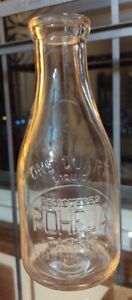
Quart Poheja Farms Dairy Milk Bottle TREQ Canton Ohio Stark County
SOLD $29.99 Sold: Dec 2, 2023 on eBayOriginal Listing Description
This Tall Round Embossed Quart bottle from Canton (Stark County), Ohio. This bottle is clear and stands 9-1/2 inches tall. It has no chips or cracks. The embossing is crisp and clear. Light scratching is common in a bottle of its age and use. Nice condition. Additional cleaning always suggested. See pics. It is embossed with the following: ONE QUART LIQUID REGISTERED POHEJA FARMS CANTON, OHIO TMC 11 3 B T M Manufacturing Company, Kane, PA; Elmira, NY; other locations (1904-1985). Mark used circa 1910s-1920s. A little history: Poheja Canton’s Fieldcrest barn complex, built circa 1904 by the Edward Rheil family (who built the original farmhouse at the same time), can claim a rightful place as one of America’s most impressive. But the story begins even earlier when William “Boss” Hoover grew up in a farmhouse built in 1853 in North Canton. Hoover, with no relation to President Herbert Hoover, had established a leather goods shop, making horse collars and harnesses, in the late 19th century. However, when the automobile began its presence in the early 1900s, “Boss” Hoover saw the writing on the wall and took a chance on a new-fangled invention. His decision to take a chance, buy a patent, and begin making the Electric Suction Sweeper added another feather to Canton’s manufacturing heritage. James Murray Spangler, one of ten children, was born in 1848 – not long after his parents moved to Canton from Pennsylvania. He married in 1874 and six years later moved to Akron, where he went into business with his brother in making gentlemen’s furnishings as well as working as a salesman for the Aultman Company. A highly creative individual, Spangler received a patent for a grain harvester in 1887 and received another for a combined hay rake and tedder in 1893. For the latter he started a company, which didn’t last long. Four years later this talented inventor got another patent, this one for a velocipede wagon, which he sold. Later, and apparently, not doing so well in any of these enterprises, he worked as a janitor, sweeping floors in the Zollinger department store in Canton. However, the constant dust wreaked havoc with Spangler’s asthma, giving him the motivation to invent yet another device. This one hit paydirt – an electric carpet sweeper. Spangler mounted a motor from a ceiling fan onto a sweeper and cut a hole in its back, allowing the dust to blow into a bag, a pillowcase he borrowed from the store. He tinkered more with the design, used the sweeper during his job, and happily got his asthma under control. In 1908 he received a patent for his “suction sweeper,” as he called the invention. A friend invested $5,000, a considerable sum in those days, in Spangler’s Electric Suction Sweeper Company, his hope for a new beginning. However, the money didn’t last long enough to begin production. Frustrated yet still excited about his sweeper, Spangler showed it to his cousin Susan Hoover, who tested it, liked it, and told her husband about it. William “Boss” Hoover bought the patent later in 1908. The fledgling company began producing sweepers, six a day, in the leather good shop, and made improvements, but sales were slow. But Hoover was determined to sell these contraptions and ingeniously offered a free, 10-day home trial (in an ad in the Saturday Evening Post) and hired salesmen, who went door to door, offering demonstrations. His marketing worked; the Hoover vacuum cleaner became a household word. Spangler worked as superintendent for the company and his wife and daughter made the sweeper bags until 1914. Now, having finally achieved success, Spangler was ready to take the first vacation of his life on a trip to Florida but he died the night (January 22, 1915) before he would have left. He was 66. While employed by Hoover, Spangler continued to patent his sweeper designs and received royalties for his efforts, which his family continued to receive until the patent expired in 1925. Though his name is not associated with his revolutionary invention, James Spangler was inducted into the National Inventors Hall of Fame in 2006. Meanwhile, the Hoover Company flourished. By 1912 the company was selling overseas and nationally through a network of retailers. “Boss” Hoover’s son, Herbert William, and his wife Grace Louise bought this farm and began a dairy operation, calling the farm “PoHeJa,” after the names of their children, Polly, Herb, James, and Jane. Their milk bottles were embossed with this acronym. Over the years the farm passed out of the Hoover family and 50 of the original 200 acres is now the Fieldcrest estate, an upscale inn with eight bedrooms. The two barns, once connected by a large carriage house, sit next to two turreted silos, forming an impressive complex. The original chicken coop has become the Coop Gift Shop; the original farmhouse is now a tea house on the estate; and the lodge (which was inspired by Hoover’s trips to Yellowstone, Colorado, and Canada) serves as a restaurant for Sunday brunch. Though the Hoover farm, the original boyhood home and farm of “Boss” Hoover, also located in North Canton, was listed on the National Register of Historic Places in 1979, the Fieldcrest estate remains unlisted. And even though the Hoover family sold the company in 1986, its name is still synonymous with vacuum cleaner, a staple in nearly every American household. Current ownership has repurposed this farmstead into a thriving business, which hopefully will continue to preserve the memory of “Boss” Hoover, his son Herbert William, and a little-known inventor, James Spangler. Thanks for looking!! Always happy to combine shipping on multiple listings! (Condition: Pre-Owned)
Note: This item has been sold and is no longer available. This page serves as a historical price reference for Milk Bottle collectors and appraisers.
Original Listing Description
This Tall Round Embossed Quart bottle from Canton (Stark County), Ohio. This bottle is clear and stands 9-1/2 inches tall. It has no chips or cracks. The embossing is crisp and clear. Light scratching is common in a bottle of its age and use. Nice condition. Additional cleaning always suggested. See pics. It is embossed with the following: ONE QUART LIQUID REGISTERED POHEJA FARMS CANTON, OHIO TMC 11 3 B T M Manufacturing Company, Kane, PA; Elmira, NY; other locations (1904-1985). Mark used circa 1910s-1920s. A little history: Poheja Canton’s Fieldcrest barn complex, built circa 1904 by the Edward Rheil family (who built the original farmhouse at the same time), can claim a rightful place as one of America’s most impressive. But the story begins even earlier when William “Boss” Hoover grew up in a farmhouse built in 1853 in North Canton. Hoover, with no relation to President Herbert Hoover, had established a leather goods shop, making horse collars and harnesses, in the late 19th century. However, when the automobile began its presence in the early 1900s, “Boss” Hoover saw the writing on the wall and took a chance on a new-fangled invention. His decision to take a chance, buy a patent, and begin making the Electric Suction Sweeper added another feather to Canton’s manufacturing heritage. James Murray Spangler, one of ten children, was born in 1848 – not long after his parents moved to Canton from Pennsylvania. He married in 1874 and six years later moved to Akron, where he went into business with his brother in making gentlemen’s furnishings as well as working as a salesman for the Aultman Company. A highly creative individual, Spangler received a patent for a grain harvester in 1887 and received another for a combined hay rake and tedder in 1893. For the latter he started a company, which didn’t last long. Four years later this talented inventor got another patent, this one for a velocipede wagon, which he sold. Later, and apparently, not doing so well in any of these enterprises, he worked as a janitor, sweeping floors in the Zollinger department store in Canton. However, the constant dust wreaked havoc with Spangler’s asthma, giving him the motivation to invent yet another device. This one hit paydirt – an electric carpet sweeper. Spangler mounted a motor from a ceiling fan onto a sweeper and cut a hole in its back, allowing the dust to blow into a bag, a pillowcase he borrowed from the store. He tinkered more with the design, used the sweeper during his job, and happily got his asthma under control. In 1908 he received a patent for his “suction sweeper,” as he called the invention. A friend invested $5,000, a considerable sum in those days, in Spangler’s Electric Suction Sweeper Company, his hope for a new beginning. However, the money didn’t last long enough to begin production. Frustrated yet still excited about his sweeper, Spangler showed it to his cousin Susan Hoover, who tested it, liked it, and told her husband about it. William “Boss” Hoover bought the patent later in 1908. The fledgling company began producing sweepers, six a day, in the leather good shop, and made improvements, but sales were slow. But Hoover was determined to sell these contraptions and ingeniously offered a free, 10-day home trial (in an ad in the Saturday Evening Post) and hired salesmen, who went door to door, offering demonstrations. His marketing worked; the Hoover vacuum cleaner became a household word. Spangler worked as superintendent for the company and his wife and daughter made the sweeper bags until 1914. Now, having finally achieved success, Spangler was ready to take the first vacation of his life on a trip to Florida but he died the night (January 22, 1915) before he would have left. He was 66. While employed by Hoover, Spangler continued to patent his sweeper designs and received royalties for his efforts, which his family continued to receive until the patent expired in 1925. Though his name is not associated with his revolutionary invention, James Spangler was inducted into the National Inventors Hall of Fame in 2006. Meanwhile, the Hoover Company flourished. By 1912 the company was selling overseas and nationally through a network of retailers. “Boss” Hoover’s son, Herbert William, and his wife Grace Louise bought this farm and began a dairy operation, calling the farm “PoHeJa,” after the names of their children, Polly, Herb, James, and Jane. Their milk bottles were embossed with this acronym. Over the years the farm passed out of the Hoover family and 50 of the original 200 acres is now the Fieldcrest estate, an upscale inn with eight bedrooms. The two barns, once connected by a large carriage house, sit next to two turreted silos, forming an impressive complex. The original chicken coop has become the Coop Gift Shop; the original farmhouse is now a tea house on the estate; and the lodge (which was inspired by Hoover’s trips to Yellowstone, Colorado, and Canada) serves as a restaurant for Sunday brunch. Though the Hoover farm, the original boyhood home and farm of “Boss” Hoover, also located in North Canton, was listed on the National Register of Historic Places in 1979, the Fieldcrest estate remains unlisted. And even though the Hoover family sold the company in 1986, its name is still synonymous with vacuum cleaner, a staple in nearly every American household. Current ownership has repurposed this farmstead into a thriving business, which hopefully will continue to preserve the memory of “Boss” Hoover, his son Herbert William, and a little-known inventor, James Spangler. Thanks for looking!! Always happy to combine shipping on multiple listings! (Condition: Pre-Owned)
Note: This item has been sold and is no longer available. This page serves as a historical price reference for Milk Bottle collectors and appraisers.